Sex in the Nuremberg Bathhouse
September 17, 2012 by Dr. Elizabeth A. Garner
Taking a bath in the medieval era was more than a cleansing ritual; it was a social event filled with complex layers of history, commerce, and hidden societal codes. In Nuremberg, the bathhouse served as a focal point for both public hygiene and, as many historical accounts suggest, less savory activities.
Albrecht Dürer’s works often hint at the realities of the life he observed around him. By examining his woodcuts and engravings, we can look past the surface of the medieval aesthetic to uncover potential ciphers and social commentaries embedded in his depictions of these bathing establishments.
The Secret Cipher
Many of Dürer's scenes, often mundane at first glance, contain geometric precision and symbolic figures that point toward a "Secret Cipher." The Nuremberg bathhouse was not merely a venue for gossip; it was a microcosm of 15th-century anxieties and secrets.
BUY THE BOOK!
CRIMES IN THE ART: THE SECRET CIPHER OF ALBRECHT DÜRER
Available now on Amazon for those seeking to decode the master's hidden narratives.
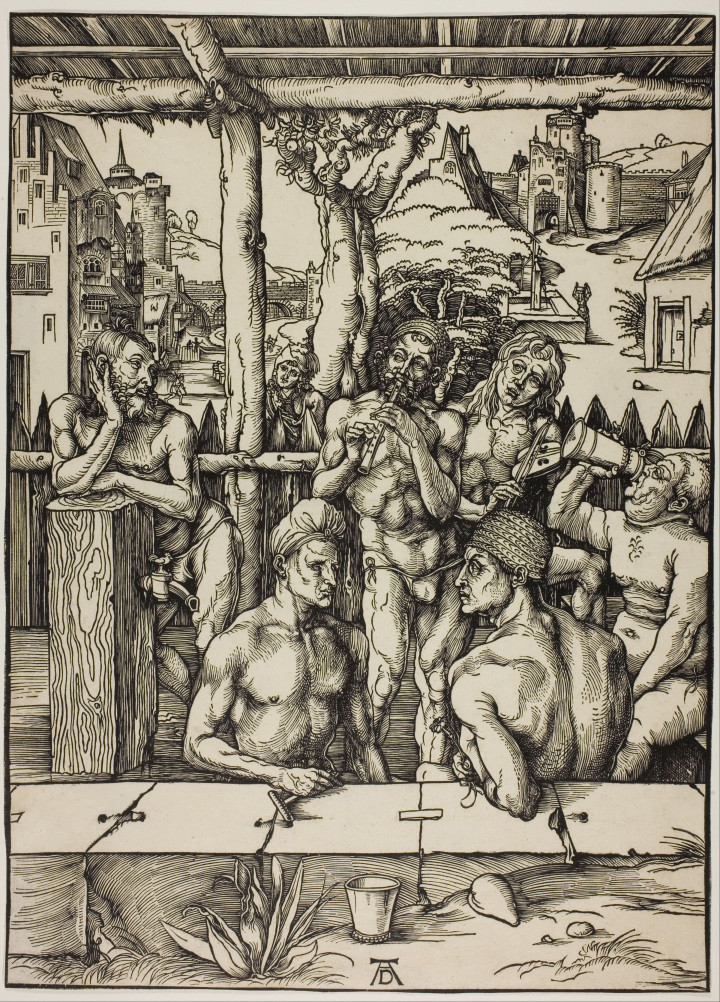
Whether exploring the influence of Wolgemut or the personal life of Willibald Pirckheimer, the threads connecting Dürer to the scandalous reputation of these institutions remain a fertile ground for art historians and sleuths alike.